 ISOFTBET


250 Welcome FS
Over 100 free blackjack demos sit right below this text, ready to load in seconds. You’ll find American Blackjack, European Blackjack, Single Deck, Multi-Hand, and Blackjack Switch – all playable without creating an account or installing anything. Use them to drill basic strategy, compare rule differences across variants, and get comfortable with card values before risking a cent. Everything runs directly in your browser on desktop or mobile.
ISOFTBET
 ASYLUM
 PLATIPUS
 GAMING1
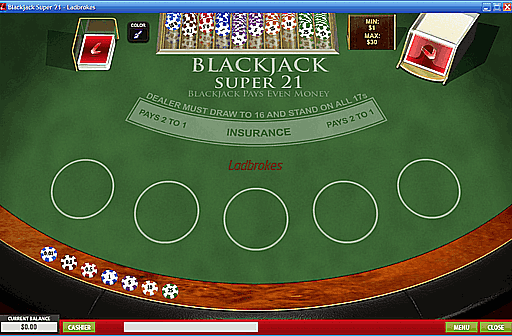 PLAYTECH
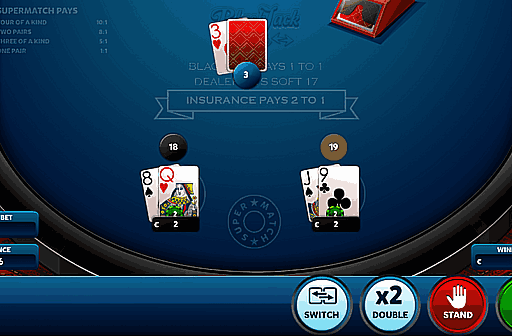 RED RAKE
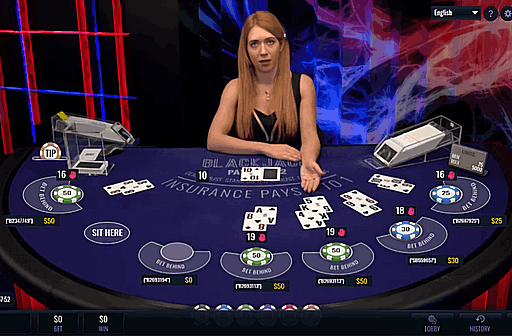 FRESH DECK
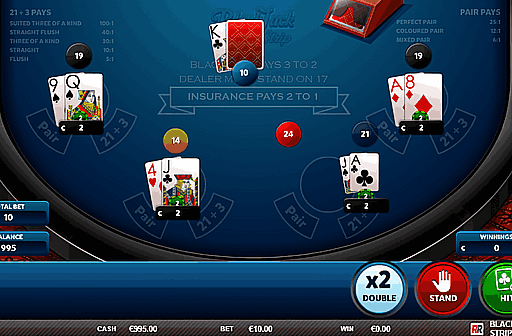 RED RAKE
 NETENT
 GAMING1
 NEXTGEN
 NEXTGEN
 1X2
1X2
 CASINO WEB SCRIPTS
 CASINO WEB SCRIPTS
 NETENT
 PLAYSON
 PLAY LABS
 TIDY
TIDY
 WORLD MATCH
 ONETOUCH
 ISOFTBET
 HABANERO
 RED RAKE
 GAMING1
 NETENT
 NETENT
 EVOPLAY
 PLAY'N GO
 PLAYSON
If you’ve drilled your strategy in demo mode and feel ready to put cash on the line, these casinos run real-money blackjack under verified rules and regulated payout structures.
 EXCLUSIVE BONUS
 99/100
 RTP: 96%
 Payout: 1–3 days
 Games: 200+
 TOP
TOP
 98/100
RTP: 98%
Payout: 1–3 days
Games: 500+
EXCLUSIVE BONUS
TOP
98/100
RTP: 98%
Payout: 1–3 days
Games: 500+
EXCLUSIVE BONUS
TOP
 97/100
RTP: 99%
Payout: 0–1 days
Games: 2000+
97/100
RTP: 99%
Payout: 0–1 days
Games: 2000+
 95/100
RTP: 97%
Payout: 0–3 days
Games: 400+
95/100
RTP: 97%
Payout: 0–3 days
Games: 400+
 NEW
NEW
 96/100
RTP: 98,4 %
Payout: 24 hours
Games: 200
96/100
RTP: 98,4 %
Payout: 24 hours
Games: 200
 97/100
RTP: 96%
Payout: 1–3 days
Games: 200+
97/100
RTP: 96%
Payout: 1–3 days
Games: 200+
 BONUS
BONUS
 95/100
RTP: 96%
Payout: 1–3 days
Games: 200+
NEW
95/100
RTP: 96%
Payout: 1–3 days
Games: 200+
NEW
 97/100
RTP: 95.80%
Payout: < 15 min
Games: 10,000+
NEW
97/100
RTP: 95.80%
Payout: < 15 min
Games: 10,000+
NEW
 95/100
Games: 4,000+
95/100
Games: 4,000+
Blackjack is a card game where you’re trying to beat the dealer, not the other players at the table. You each get two cards, and the objective is simple: get closer to 21 than the dealer without going over. Cards 2–10 carry face value, face cards (Jack, Queen, King) count as 10, and Aces swing between 1 or 11 depending on what helps your hand.
Here’s what separates blackjack from slots or roulette: your choices actually matter. Deciding when to hit, stand, double down, or split isn’t just theatre – it shifts the math. Apply correct basic strategy on a standard 3:2 game and the house edge sits around 0.5%. Compare that to 2–5% on most roulette bets or the 5–12% grind on typical slot machines, and the difference is stark.
That skill component is exactly why free blackjack has real value as a training tool. You can build the right decision-making habits in demo mode, without burning through your bankroll while you learn when to split those 8s.
Step by Step
The core loop is the same regardless of variant. Here’s what a typical round looks like in demo mode.
Use the filters above to sort by variant or provider. You’re playing with virtual credits in demo mode, so bet size only controls how fast your balance swings. If you’re just starting out, stick with American Blackjack or Classic Blackjack – they’re the simplest rule sets to learn on.
Pick your chip size and click the betting circle. Since there’s no real money on the line, treat this as bankroll management practice. Keeping bets smaller stretches your session longer and lets you focus on making the right plays rather than chasing big numbers.
You get two cards face up. The dealer also gets two, but in American blackjack one stays hidden. Your hand total shows on screen right away. If you land an Ace plus any 10-value card on the initial deal, that’s a natural blackjack – typically paying 3:2.
This is where the game actually lives. Hit to draw another card, stand to lock in your total, double down to double the wager for exactly one more card, or split matching cards into two separate hands. Every choice here moves the expected return in one direction or the other.
Once you’re done, the dealer flips the hidden card and draws based on fixed rules – usually hitting on 16 or less and standing on 17 or higher. Beat the dealer without busting and credits land in your balance. Run out of virtual chips? Just reload. That’s the whole point of free play.
A 3:2 table pays $15 on a $10 natural blackjack. A 6:5 table? Just $12 for the exact same hand. That gap adds roughly 1.4% to the house edge, and over a few hundred hands it carves a real hole in your bankroll. Checking the pay table before sitting down takes five seconds and saves you actual money.
Other rule tweaks matter too. A dealer who hits on soft 17 (a hand with an Ace counted as 11) bumps the house edge up by about 0.2% versus one who stands. On the flip side, being allowed to double down after splitting shaves roughly 0.15% off. Free demos are the easiest way to spot these differences before you commit real cash to any particular table.
Know Your Cards
Card values stay the same across all standard variants. The payouts below reflect a typical 3:2 table.
| Hand / Outcome | Example | Payout |
|---|---|---|
| Natural Blackjack | Ace + King on initial deal | 3:2 ($15 on a $10 bet) |
| Winning Hand | Your 19 beats dealer’s 17 | 1:1 ($10 on a $10 bet) |
| Insurance (if offered) | Dealer shows Ace, you side-bet | 2:1 on insurance wager |
| Push (Tie) | Both hands total 18 | Bet returned |
| Bust | Your hand exceeds 21 | Bet lost |
Look at the difference between those top two rows. A natural blackjack at 3:2 pays 50% more than a regular win on the same bet. Drop to a 6:5 table, and that natural only returns 1.2x your wager instead of 1.5x. It sounds like a small thing until you do the maths over a long session. Checking the payout ratio before your first hand takes seconds and directly shapes your long-term results.
Game Types
Each variant tweaks the base rules in ways that shift both strategy and the house edge. Start with American or Classic if you’re new, then branch out once the fundamentals click.
House edge: ~0.5% (with basic strategy)
The dealer gets two cards – one face up, one hidden – and checks for blackjack right away. This is the version most US players cut their teeth on. Standard rules let you double on any two cards and split up to three times. Most online versions deal from 6 or 8 decks.
House edge: ~0.4–0.6%
The dealer only takes one face-up card initially and doesn’t draw the second until every player has acted. That “no hole card” setup means you risk losing your doubled or split bets if the dealer ends up revealing blackjack. You’ll need to adjust your strategy compared to the American version – particularly around doubling against a dealer 10 or Ace.
House edge: ~0.15–0.35% (fair rules)
Just one 52-card deck, which makes card tracking simpler and drops the house edge when the rules are fair (3:2 payouts, dealer stands on soft 17). The catch? Some casinos offset that advantage by slapping 6:5 payouts on single-deck games, so always check the pay table before assuming you’re getting a good deal.
House edge: same as base game (~0.5%)
You manage 3, 5, or more hands at once in each round. The edge per hand doesn’t change, but your total exposure is higher and variance ramps up accordingly. This format works well for experienced players who want faster action and can apply basic strategy consistently across multiple hands without mixing up their decisions.
House edge: ~0.17% (optimal play)
You play two hands and can swap the top cards between them to build stronger combinations. The trade-off is real, though: a dealer 22 pushes instead of busting, and natural blackjack only pays 1:1 instead of 3:2. The switching mechanic opens up strategic decisions you won’t find anywhere else.
House edge: ~0.36%
Eight decks, late surrender (you can forfeit half your bet after seeing the dealer’s upcard), and doubling after splits. That late surrender option is the big draw here – it shaves real percentage points off specific weak hands like hard 16 against a dealer 10. More tools in the toolbox than most standard variants offer.
Play Smarter
Free play strips out the financial stress so you can focus on building correct habits. These six rules apply across most blackjack variants.
Basic strategy is a chart of mathematically correct plays for every possible hand versus the dealer’s upcard. Following it drops the house edge under 0.5% on most standard games. Print a chart, keep it next to you during free play, and reference it until the right moves feel automatic. It’s the single biggest lever you have.
When your hand hits 17 without an Ace counting as 11 (that’s a “hard” hand), the bust risk from drawing another card outweighs the upside. Standing on hard 17+ is correct in almost every scenario, no matter what the dealer is showing. Don’t overthink this one.
Splitting Aces gives you two shots at landing 21. A pair of 8s totals 16, which is arguably the worst hand in blackjack – splitting turns a losing position into two playable ones. Both splits are correct regardless of the dealer’s card. On the other hand, don’t split 10s or 5s. Keeping them together is mathematically stronger in both cases.
If your first two cards total 10 or 11 and the dealer shows a weaker upcard (2–9), doubling is often the highest expected-value play available. You take exactly one more card, and the odds of landing a 20 or 21 are strongly in your favour. It’s one of the few spots where aggression genuinely pays off.
When the dealer shows an Ace, the game usually offers insurance at 2:1. Sounds tempting. It’s not. That side bet carries a house edge around 7% because a 10-value card shows up less than a third of the time. Over any meaningful sample size, skipping insurance costs you less than taking it.
Two games both called “Classic Blackjack” can run completely different deck counts, payout ratios, and dealer rules. Verifying whether you’re getting 3:2 or 6:5 and whether the dealer hits or stands on soft 17 takes a few seconds. That quick check can mean more than a 1% swing in house edge, which adds up fast.
Numbers That Matter
Correct basic strategy gives blackjack one of the lowest house edges in any casino, online or off. The table below puts common blackjack variants side by side with other popular games so you can see the difference in raw numbers.
| Game | House Edge (optimal play) | Skill involved? |
|---|---|---|
| Single Deck Blackjack (3:2, fair rules) | 0.15–0.35% | Yes |
| Blackjack Switch | ~0.17% | Yes |
| Atlantic City Blackjack | ~0.36% | Yes |
| American Blackjack (6-deck, 3:2) | ~0.5% | Yes |
| European Blackjack | ~0.4–0.6% | Yes |
| 6:5 Single Deck Blackjack | ~1.4% | Yes |
| Baccarat (banker bet) | ~1.06% | No |
| Roulette (European, single zero) | 2.7% | No |
| Online slots (average) | 4–6% | No |
| Land-based slots (average) | 7–12% | No |
Players who sharpen their strategy in demo mode carry that edge reduction straight into real-money sessions. The combination of transparent rules, a low house edge, and genuine decision-making influence is why blackjack remains one of the most player-friendly games you’ll find in any casino.
Short answer: not in any practical way for most online games. Card counting is a legitimate edge in land-based casinos where physical cards deal from a shoe and stay out until a cut card triggers a reshuffle. Online RNG blackjack reshuffles the virtual deck after every single hand, which makes tracking card distribution pointless.
Live dealer games use real cards, which sounds more promising – but most studios run continuous shuffle machines or reshuffle every few hands. That kills the deck penetration counters need to get any meaningful edge. A handful of live tables do deal deeper into the shoe, but they’re rare and usually carry higher minimum bets that eat into your expected profit.
For the vast majority of online players, correct basic strategy is the more reliable edge-reduction tool. It doesn’t rely on deck conditions, and you can drill it for free in demo mode until every hit, stand, and double decision becomes second nature.
Free vs Paid
Both versions run on the same RNG engine with identical rules, card distribution, and house edge. The difference comes down to what’s on the line and which features you can access.
| Feature | Free Play | Real Money |
|---|---|---|
| Cost to play | None (demo credits) | Requires deposit |
| Account needed | No | Yes (with ID verification) |
| Win real money | No | Yes |
| Same rules & house edge | Yes | Yes |
| Casino bonuses available | No | Yes |
| Live dealer tables | View only (some sites) | Full access |
| Side bets | Available in some demos | Full range |
| Ideal for | Practice, learning strategy | Winning cash prizes |
If you’re still figuring out when to hit, stand, split, or double, free blackjack strips away the financial pressure while you learn. Once you can consistently apply correct strategy in demo mode without second-guessing, the move to real money becomes a much smaller leap.
Pros & Cons
Demo play is genuinely useful for learning, but let’s be honest about what it can’t do.
Pros
Cons
Yes, and you don’t need to download anything. Every game here is built in HTML5 and runs in any modern mobile browser on Android or iOS – Chrome, Safari, Firefox, whatever you’ve got. Tap a game, and it resizes to fit your screen automatically. Rotating to landscape often gives you a better view of the table layout and the action buttons, especially on smaller phones.
Your internet connection matters more than the age of your phone. Any smartphone released in the last four or five years handles RNG blackjack without stuttering. Touch controls replace mouse clicks, and card values stay readable even on compact screens. If a game loads slowly, clearing your browser cache or shutting down a few background tabs usually sorts it out.
Yes. Every blackjack game on FreeSlots99 runs directly in your browser using HTML5. There’s no download, no app to install, and no account to create. Just open the page, pick a game, and you’re playing.
Yes. The demo versions use the same RNG engine, identical rules, card distribution, and house edge as the real-money games. The only practical difference is that your wins pay out in virtual credits rather than cash.
No. Free blackjack runs on demo credits only. If you want to win actual cash, you’ll need to sign up at a licensed online casino and play with a real-money balance.
American Blackjack is the most common starting point – straightforward rules, widely available strategy charts, and a house edge around 0.5% with basic strategy. Once you’re comfortable there, Single Deck or Atlantic City Blackjack are logical next steps, since both carry slightly lower house edges under optimal play.
It depends on the variant and rule set. Standard American Blackjack with 3:2 payouts sits around 0.5% with correct basic strategy. Single Deck under fair rules can go as low as 0.15%. Games paying 6:5 on naturals push the edge up to roughly 1.4%, which eats into your bankroll noticeably over a long session.
Not for most online games. RNG blackjack reshuffles the virtual deck after every hand, so there’s nothing to count. Live dealer tables use real cards, but most employ continuous shuffle machines or reshuffle frequently, which limits counting effectiveness to the point where it’s rarely worth the effort.
Yes. All games on this page are HTML5-based and work in mobile browsers on both Android and iOS. No app download required – just open your browser, tap a game, and it adjusts to your screen size on its own.
The ratio is the payout for hitting a natural blackjack (Ace plus a 10-value card on the initial deal). At 3:2, a $10 bet pays $15. At 6:5, that same bet pays just $12. The difference adds about 1.4% to the house edge, which makes 3:2 tables significantly better for your bankroll over time.

Filip Gromovic is a senior slots reviewer here at FreeSlots99 with over five years of experience evaluating the latest drops in the world of iGaming.
Being a slot fan himself, Filip approaches slot ratings just the way we like it – professionally, but also from a player’s standpoint.
That enables him to give his unbiased take on the slot’s features, gameplay and design, while only recommending top-tier releases to our readers.
More info on Filip Gromovic



Having served FreeSlots99 for more than 5 years as a senior content editor and reviewer, Nashon Khamala has extensive knowledge in game slots and iGaming.
His membership in the Editorial Freelancers Association helps him deliver content that reaches both editorial excellence standards and an engaging information level.
By using his expertise in slots games combined with player-focused analysis, Nashon delivers a professional evaluation of slot features and player experiences in his reviews.
More info on Nashon Khamala


Join Bankrolla and claim 200,000 GC + 2 SC