 PRAGMATIC PLAY


250 Welcome FS
Written by: Filip Gromovic Reviewed by: Nashon Khamala
This page gives you instant access to free 7-reel slots — playable directly in your browser with no download, no deposit, and no registration required. Every game listed here runs on a seven-reel grid, which means a wider playing field, more symbols in view on each spin, and winning systems that go well beyond the traditional five-reel payline format. The full mechanic is active in demo mode — cluster pays, pay anywhere systems, tumble features, and bonus rounds all function exactly as they would in a paid session.
7-reel slots cover a range of formats: cluster pays grids like Reactoonz and Sugar Rush, tumbling reel games, pay-anywhere formats, and some titles that retain traditional paylines across an extended reel set. The format is more varied than the reel count alone suggests — understanding that variety before choosing where to demo is the main practical value of this page.
PRAGMATIC PLAY
 PRAGMATIC PLAY
 B3W
B3W
 RELAX
RELAX
 PLAY'N GO
 PLAY'N GO
 PLAY'N GO
 RELAX
RELAX
 INSPIRED
 BARCREST
Every 7-reel slot above launches instantly in your browser — no account, no software, no deposit. Click any game and the demo opens on desktop, Android, or iOS. Winning mechanics — cluster pays, tumble chains, pay-anywhere, bonus rounds — are all fully active in demo mode. For the latest 7-reel releases added in 2026, see our new slots page.
7-reel slots are slot games that run on a seven-column grid rather than the three or five columns used by traditional reel formats. The additional columns mean more symbols are visible on each spin, more potential winning positions exist on the grid, and the overall play area is substantially wider than in any standard slot format.
The term "7 reels" is a grid dimension descriptor rather than a mechanic — it tells you how wide the playing field is, not how wins are formed. The winning system in a 7-reel slot varies by title. Some use cluster pays, where groups of five or more matching symbols touching adjacently form wins regardless of column position. Others use pay-anywhere or ways-to-win systems. A smaller number retain traditional paylines across the extended reel set, though this is less common in modern 7-reel designs.
The most widely played 7-reel titles — Reactoonz, Sugar Rush, Gemix — use cluster pays on square grids where the "7 reels" description refers to a 7×7 layout holding 49 symbols per spin. These titles represent the dominant format within the 7-reel category in 2026.
The mechanics of a 7-reel slot depend entirely on which winning system the title uses. Because the 7-reel format hosts multiple different pay systems, understanding which type you are playing before the first demo spin is more useful than any general description of 7-reel games as a category.
The reel count tells you the grid width — the pay system tells you how wins are actually formed. Check which type a title uses before testing in demo mode.
The dominant format in 7-reel slots. Wins form when five or more matching symbols touch horizontally or vertically anywhere on the 7×7 grid — no paylines, no column sequence required. Larger clusters pay more. Winning symbols are removed and replaced, often triggering chain reactions. Used by Reactoonz, Sugar Rush, Gemix, Jammin' Jars.
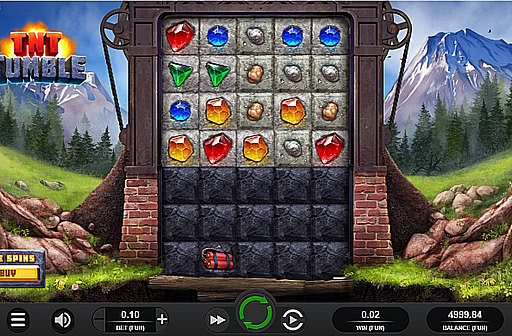
Wins form when matching symbols appear on a set number of adjacent reels, starting from reel 1, regardless of row position. On a 7-reel grid this can produce tens of thousands of ways to win per spin. Used in some Megaways-compatible 7-reel formats and in games like TNT Tumble.
Less common in the 7-reel format but present in some titles. Standard payline wins apply across a wider reel set — more reels mean more possible payline configurations and a higher maximum ways-to-win count than a 5-reel equivalent. Typically seen in lower-volatility 7-reel titles.
The winning system matters more than the reel count when choosing a 7-reel slot to test in demo mode. Two 7-reel games that look visually similar can have completely different session rhythms if one uses cluster pays and the other uses a ways-to-win format.
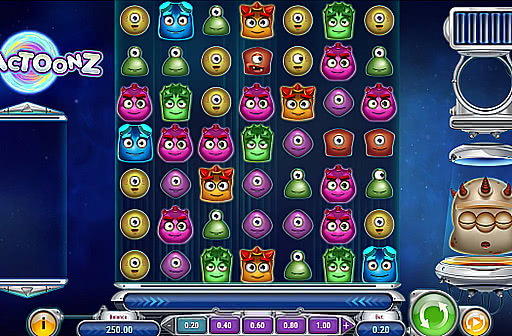
Cluster pays games like Reactoonz evaluate the full grid on every spin for groups of five or more matching symbols touching adjacently. A win in the top-left corner of the grid is equally valid as a win in the bottom-right — position relative to column sequence is irrelevant. This creates a session where the entire 49-symbol field is active simultaneously, and a single spin can produce multiple disconnected winning clusters that each pay and clear independently.
Ways-to-win formats on 7-reel grids evaluate matching symbols starting from the leftmost reel. On a 7-reel grid with three rows, a full ways-to-win system produces 3×3×3×3×3×3×3 = 2,187 ways — compared to 243 ways on a standard 5-reel, 3-row game. Some 7-reel Megaways titles extend this further by varying the row count per reel, producing variable ways-to-win counts on each spin in the hundreds of thousands.
For players new to 7-reel slots, cluster pays is the format worth understanding first — it is the dominant format in the category and powers the most widely played 7-reel titles. Testing a cluster pays 7-reel game in demo mode for 30 spins and watching how winning groups form across the full grid gives you a clear picture of how the format differs from any payline-based slot you may already know.
| Feature | 5-Reel Slots | 7-Reel Slots |
| Grid width | 5 columns | 7 columns |
| Symbols per spin (3 rows) | 15 | 21 (payline) or 49 (7×7 cluster grid) |
| Dominant pay system | Fixed paylines or ways-to-win | Cluster pays or pay anywhere |
| Winning condition | 3+ matching symbols left-to-right on a payline | 5+ matching symbols touching adjacently (cluster) or matching left-to-right (ways) |
| Chain mechanics | Common — cascades, tumbles | Very common — most 7-reel cluster titles have cascade chains |
| Volatility range | Low to very high | Medium to high — lower end less common |
| Session rhythm | Spin-by-spin, defined payline evaluation | Wider evaluation, cluster cascades create longer spin sequences |
| Notable examples | Gates of Olympus, Starburst, Book of Dead | Reactoonz, Sugar Rush, Gemix, Jammin' Jars |
The most significant practical difference is the winning condition. In a 5-reel payline slot, a win requires matching symbols on a specific pre-defined line from left to right. In a 7-reel cluster pays slot, a win requires a group of matching symbols touching anywhere on the grid — there are no lines, no left-to-right requirement, and no dead zones. This makes the grid evaluation more complex and the wins less predictable from spin to spin, which is a key part of what makes the format engaging for players who find traditional payline slots too mechanical.
The best 7-reel slots in 2026 are defined by how clearly their winning mechanic works in demo mode and how distinct the play experience is from standard 5-reel formats. These six titles represent the most widely played and mechanically varied entries in the 7-reel catalogue.
| Slot | Provider | Grid | Pay System | Key Feature | Volatility | Best For |
| Reactoonz | Play'n GO | 7×7 | Cluster pays | Charge metre with 4 feature states | High | Players testing cluster pays with a progression mechanic |
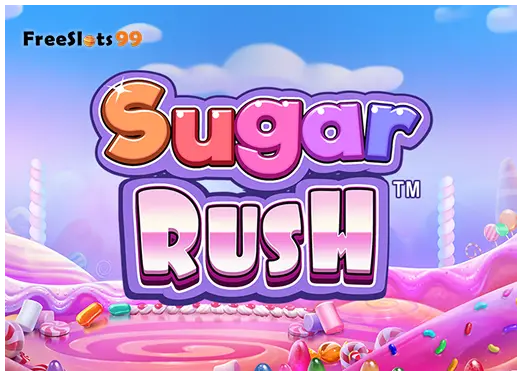
| Sugar Rush | Pragmatic Play | 7×7 | Cluster pays + tumble | Multiplier grid — persistent across free spins | High | Players comparing persistent multiplier mechanics on a 7×7 grid |
| Jammin' Jars | Push Gaming | 8×8 | Cluster pays | Moving multiplier wilds per cascade | High | Players who want cluster pays with multiplier wilds |
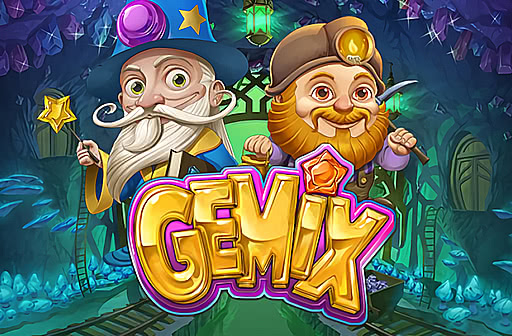
| Gemix | Play'n GO | 7×7 | Cluster pays | Crystal charges and power-up features | Medium | Players who want cluster pays at medium volatility |
| Gigantoonz | Play'n GO | 7×7 | Cluster pays | Giant symbol overlay on 7×7 grid | High | Players who enjoy the Reactoonz style with giant symbols added |
| TNT Tumble | Relax Gaming | 7 reels | Pay anywhere + tumble | Bomb symbols remove low-value symbols | High | Players who want a non-cluster 7-reel format with tumble mechanic |
The majority of widely played 7-reel slots cluster at medium to high volatility. This is partly a function of the cluster pays format, which concentrates payout potential in larger cluster formations and cascading chains rather than distributing it across frequent small payline wins.
Medium volatility 7-reel slots — Gemix is the clearest example in the current catalogue — trigger winning clusters regularly enough to sustain a session without extended losing runs. High-volatility examples like Reactoonz and Sugar Rush produce fewer winning spins overall, but the chain reactions when clusters do form — and particularly during bonus rounds where the grid state changes — produce substantially larger individual results.
Most 7-reel titles are medium to high volatility. Here is what each level means for a demo session.
Infrequent large cluster chains — the dominant 7-reel profile
High-volatility 7-reel slots produce fewer winning spins but larger payouts when cluster chains form. Demo sessions at this level should run 80–150 spins to give a realistic picture of the session rhythm. Examples: Reactoonz, Sugar Rush, Jammin' Jars, TNT Tumble.
Regular cluster wins — the best entry point for 7-reel demo play
Medium-volatility 7-reel slots form winning clusters more regularly, making them easier to evaluate in shorter demo sessions. The bonus features trigger more often and the overall rhythm is more consistent. Best starting point for players new to the cluster pays format. Example: Gemix, King Carrot.
RTP in the 7-reel slot category ranges from around 94% to 97% depending on title and casino operator. Some casinos run reduced-RTP variants of popular 7-reel titles — particularly Reactoonz and Sugar Rush, which are available at multiple RTP configurations. Checking the RTP in the game's help screen before a real-money session is worth the time. For RTP-focused browsing see our highest RTP slots guide.
Several studios have built their most distinctive titles around the 7-reel cluster pays format. Provider identity predicts session style more reliably in 7-reel slots than in many other categories, because the design philosophies behind cluster pays grids are more individual than the relatively standardised approach to 5-reel payline games.
Play'n GO has produced the most influential 7-reel cluster pays titles in the catalogue. Reactoonz (2017) established the charge-metre progression model: cascading cluster wins fill four successive feature states that alter the grid — quantum wilds, implosions, teleports, and the Giantoonz feature that places a giant symbol on the grid. Gemix is the medium-volatility counterpart, using a crystal-charge system that activates power-ups. Both games use identical grid dimensions and cluster mechanics — the difference is the secondary feature architecture and the volatility profile. Gigantoonz (2021) extends the Reactoonz model with a giant symbol mechanic overlaid on the 7×7 cluster grid.
Pragmatic Play's 7-reel contributions are built on the tumble mechanic: winning symbols are removed and new ones drop in from above, with the possibility of chain reactions. Sugar Rush layers a persistent multiplier grid on top — specific positions on the 7×7 grid can accumulate multiplier values between spins that compound during the free-spin bonus. This design produces a session where the base game serves as a preparation phase for the bonus, where the accumulated multipliers drive the majority of variance. For further browsing, see our full Pragmatic Play slots page.
Push Gaming's Jammin' Jars uses an 8×8 cluster pays grid — technically one reel wider than the 7-reel standard — but sits within the same format category. The mechanic is distinctive: wild symbols with multiplier values shift one position across the grid with each cascade, meaning their location changes as the chain develops. A wild that starts in a corner position can travel to a central cluster-rich position by the third or fourth cascade step. This spatial multiplier mechanic is not present in any Play'n GO or Pragmatic Play 7-reel title and makes Jammin' Jars a genuinely different session experience within the cluster pays format.
Provider style predicts session feel more reliably in 7-reel cluster pays than in most other slot categories.
| Provider | Grid Format | Pay System | Secondary Mechanic | Volatility | Key Titles |
|---|---|---|---|---|---|
| Play'n GO | 7×7 | Cluster pays | Charge metre with sequential feature states | Medium–High | Reactoonz, Gemix, Gigantoonz, Gemix 2 |
| Pragmatic Play | 7×7 | Cluster pays + tumble | Persistent multiplier grid in free spins | High | Sugar Rush, Sugar Rush Xmas |
| Push Gaming | 8×8 | Cluster pays | Moving multiplier wilds per cascade | High | Jammin' Jars, Jammin' Jars 2 |
| Relax Gaming | 7 reels | Pay anywhere + tumble | Bomb symbols clear low-value positions | High | TNT Tumble, Templar Tumble |
| Thunderkick | 7×7 | Cluster pays | Crystal charge power-ups | Medium | Gemix (licensed) |
7-reel cluster pays slots suit a specific type of player preference. They are not a better or worse version of standard reel slots — they are a structurally different format that appeals to different session priorities.

The offers below are for players who want to move from demo play to real-money 7-reel sessions with a casino bonus. Check wagering requirements, eligible games, and expiry windows — these are promotional products separate from demo play.
 EXCLUSIVE BONUS
 99/100
 RTP: 96%
 Payout: 1–3 days
 Games: 200+
 TOP
TOP
 98/100
RTP: 98%
Payout: 1–3 days
Games: 500+
EXCLUSIVE BONUS
TOP
98/100
RTP: 98%
Payout: 1–3 days
Games: 500+
EXCLUSIVE BONUS
TOP
 97/100
RTP: 99%
Payout: 0–1 days
Games: 2000+
97/100
RTP: 99%
Payout: 0–1 days
Games: 2000+
 95/100
RTP: 97%
Payout: 0–3 days
Games: 400+
95/100
RTP: 97%
Payout: 0–3 days
Games: 400+
 NEW
NEW
 96/100
RTP: 98,4 %
Payout: 24 hours
Games: 200
96/100
RTP: 98,4 %
Payout: 24 hours
Games: 200
 97/100
RTP: 96%
Payout: 1–3 days
Games: 200+
97/100
RTP: 96%
Payout: 1–3 days
Games: 200+
 BONUS
BONUS
 95/100
RTP: 96%
Payout: 1–3 days
Games: 200+
NEW
95/100
RTP: 96%
Payout: 1–3 days
Games: 200+
NEW
 97/100
RTP: 95.80%
Payout: < 15 min
Games: 10,000+
NEW
97/100
RTP: 95.80%
Payout: < 15 min
Games: 10,000+
NEW
 95/100
Games: 4,000+
95/100
Games: 4,000+
7-reel slots represent one of the most significant departures from traditional slot design in the current catalogue. The wider grid, the cluster pays evaluation system, and the cascade chain mechanics combine to produce a session experience that is structurally incomparable to any payline format — not better or worse, but genuinely different in ways that only become clear through direct play.
The practical recommendation is straightforward: if you have not played cluster pays before, start with Gemix for the medium-volatility entry point and follow it with Reactoonz or Sugar Rush for the high-volatility version. That two-title comparison — same grid format, different volatility and secondary feature architecture — gives you a complete picture of what the 7-reel cluster pays format offers. From there, TNT Tumble shows you the non-cluster variant of the format, and Jammin' Jars shows you the 8×8 grid with moving multiplier wilds. Four demo sessions covering those four titles covers the meaningful range of what 7-reel slots currently offer.
Continue exploring: cluster pays slots, cascading slots, high volatility slots, new slots 2026.
7-reel slots are slot games that run on a seven-column grid — wider than standard three or five-reel formats. The additional columns produce more symbols per spin and a wider playing field. In practice, the most widely played 7-reel slots use a 7×7 cluster pays grid containing 49 symbols per spin, where wins form when five or more matching symbols touch adjacently anywhere on the grid rather than on fixed paylines.
Most 7-reel slots use a cluster pays system: symbols land on a 7×7 grid and wins form when five or more matching symbols touch horizontally or vertically anywhere on the grid. Winning clusters are removed and new symbols drop in, potentially forming new clusters in a cascade chain. Some 7-reel titles use ways-to-win or pay-anywhere systems instead — in those, matching symbols on adjacent reels starting from the left form wins without needing to be on a specific payline. The winning system varies by title and is worth checking before your first demo session.
They are not better — they are structurally different. 7-reel cluster pays slots evaluate the entire grid simultaneously for adjacent symbol groups, which produces a different session rhythm than 5-reel payline slots where wins require specific left-to-right symbol sequences. Players who find payline evaluation mechanical often prefer the cluster format; players who prefer clear left-to-right win structures typically find 5-reel payline games more intuitive. Testing both in demo mode is the most reliable way to identify which format suits your preference.
The majority of widely played 7-reel slots are medium to high volatility. High-volatility examples like Reactoonz and Sugar Rush produce fewer winning spins but larger chain results when clusters do form. Medium-volatility examples like Gemix trigger winning clusters more regularly with more consistent payout ranges. Very low volatility 7-reel titles are uncommon in the current catalogue — the cluster pays format structurally tends toward medium-to-high variance.
Yes. Every 7-reel slot on this page is available in demo mode — no deposit, no registration, no download required. The cluster pays mechanic, cascade chains, multiplier features, and bonus rounds are all fully active in demo play. You cannot win or lose real money in demo mode.
Gemix is the best entry point — medium volatility means the cluster pays mechanic is easier to observe across a short demo session, winning clusters form regularly, and the crystal charge power-up system gives you a clear example of how secondary progression mechanics work in this format. After Gemix, test Reactoonz to understand how the same cluster pays grid behaves at higher volatility with a more complex four-state feature architecture.
Play'n GO has produced the most influential 7-reel cluster pays titles — Reactoonz, Gemix, and Gigantoonz are the clearest examples of what the format can do. Pragmatic Play's Sugar Rush represents the tumble-plus-multiplier-grid variant. Push Gaming's Jammin' Jars adds moving multiplier wilds to the cluster pays format. Relax Gaming's TNT Tumble is the best non-cluster example of a 7-reel format using pay anywhere and a bomb-symbol mechanic.
Most 7-reel slots include a bonus round, though the trigger mechanism varies by title. Reactoonz's bonus is triggered by filling the charge metre through consecutive cluster wins — not by scatter symbols. Sugar Rush triggers free spins via scatter symbols and uses the accumulated multiplier grid during the bonus phase. Jammin' Jars triggers free spins through a gold record scatter. The bonus round in all cases is fully accessible in demo mode.
This guide was written and reviewed by our iGaming team. It covers how 7-reel slot grids work across different pay systems, how the cluster pays format differs from standard payline and ways-to-win formats, how volatility is distributed across the 7-reel catalogue, and how demo play can be used to evaluate the format before real-money sessions. All descriptions are based on published game specifications and direct demo-play testing.

Senior iGaming Writer
Filip Gromovic
Filip Gromovic wrote this guide. He specialises in explaining slot grid formats, cluster pays mechanics, and volatility profiles in practical terms that help players evaluate games before real-money play.
More about Filip Gromovic
Senior iGaming Reviewer
Nashon Khamala
Nashon Khamala reviewed this article for factual accuracy, verifying that all 7-reel mechanic descriptions, pay system comparisons, and provider attributions accurately reflect how the games behave in demo and real-money play.
More about Nashon Khamala

Join Bankrolla and claim 200,000 GC + 2 SC