 BTG
BTG


250 Welcome FS
Written by: Filip Gromovic Reviewed by: Nashon Khamala
This page gives you instant access to free cascading slots — playable directly in your browser with no download, no deposit, and no registration required. Every game listed here features tumbling or cascading reels: winning symbols are removed from the grid and replaced by new ones dropping in from above, creating consecutive win chains from a single paid spin. The mechanic is fully active in demo mode, so you can experience exactly how it behaves before committing real money.
If you arrived here looking for casino free spins promotions on cascading-reel games, that is a separate category — we cover both below. This page focuses on free demo play where the cascading mechanic can be tested and compared across different providers and volatility levels.
BTG
 PRAGMATIC PLAY

 PRAGMATIC PLAY
 PRAGMATIC PLAY

 PRAGMATIC PLAY
 PARTYGAMING
 INSPIRED
 AINSWORTH

 BARCREST
 BGAMING

 IGT
IGT
 PLAY’N GO

 NETENT
 PRAGMATIC PLAY

 SG
SG
 HIGH5
HIGH5
Every slot listed above is available to play right now in demo mode — no account needed, no software to install, no deposit required. Click any game thumbnail and the demo launches directly in your browser on desktop, Android, or iOS. The cascading reel mechanic is fully active: winning symbols are removed and replaced in real time, consecutive cascade chains resolve exactly as they would in a real-money session, and any multipliers attached to the cascade sequence accumulate normally.
Demo play is the most reliable way to evaluate a cascading slot before spending real money. The chain frequency, cascade depth, and bonus trigger behavior are all identical to the paid version — the only difference is the currency. For the latest cascading releases added in 2026, continue to our new slots page after testing the games here.
Cascading slots are video slot games where winning symbols are removed from the grid after a win and replaced by new symbols dropping in from above — all without deducting from your balance for an additional spin. If the replacement symbols form another winning combination, those are removed too, and the process repeats. A single paid spin can therefore produce multiple consecutive wins in a chain before the grid finally settles with no winning combination present.
This mechanic goes by several names depending on the provider: cascading reels, tumbling reels, avalanche reels, or rolling reels. The core behavior is identical across all of them — winning symbols disappear and new ones fill the vacated positions. The name used is a branding choice by the studio, not an indication of a different mechanic. Pragmatic Play uses "tumble," Big Time Gaming uses "cascade," NetEnt's Gonzo's Quest used "avalanche" — the result is the same.
What separates cascading slots from standard reel games is the potential for a single spin to generate compounding value. In a fixed-reel slot, one spin produces one result. In a cascading slot, one spin can produce four, five, or more sequential wins if the conditions align — which makes them structurally different from any non-cascade game, regardless of theme or provider.
The mechanics are straightforward once you have seen them in action, but reading a description before your first demo session helps you understand what you are watching when a cascade chain begins.
Each step below happens automatically within the same paid spin — no additional bet is required at any stage.
The practical result is that a single paid spin can last several seconds as the cascade chain resolves — and the total payout from that one spin is the sum of every winning combination produced across all cascade steps. In demo mode you can watch this play out without any financial pressure, which makes it the most efficient way to understand how deep a cascade chain can realistically run on a given title before playing for real money.
These three terms describe the same core mechanic with different studio branding applied. Understanding that they are functionally identical removes confusion when browsing slots across different providers.
| Term | Provider(s) Using It | Core Mechanic | Notable Examples |
| Cascading Reels | Big Time Gaming, Blueprint | Winning symbols removed; new ones drop in from above | Bonanza Megaways, Extra Chilli |
| Tumble | Pragmatic Play | Identical to cascading — Pragmatic Play's branded term | Gates of Olympus, Sugar Rush 1000 |
| Avalanche | NetEnt (legacy) | Identical mechanic; symbols "fall" into empty positions | Gonzo's Quest |
| Rolling Reels | Microgaming | Identical mechanic with optional multiplier trail | Thunderstruck II (free spins variant) |
| Reaction Feature | Push Gaming | Winning symbols burst; replacement symbols arrive | Jammin' Jars |
The only meaningful differences between implementations are: whether a multiplier is attached to the cascade chain, how many cascade steps are required to activate the multiplier, and whether the mechanic applies in the base game only or also during the free-spin bonus. All of those variables are visible in demo play within a short session.
The best cascading slots in 2026 are defined not by popularity alone but by how clearly their cascade mechanic can be evaluated in demo mode and how much the cascade chain contributes to the game's overall variance. These six titles consistently stand out across different player types and cascade implementation styles.
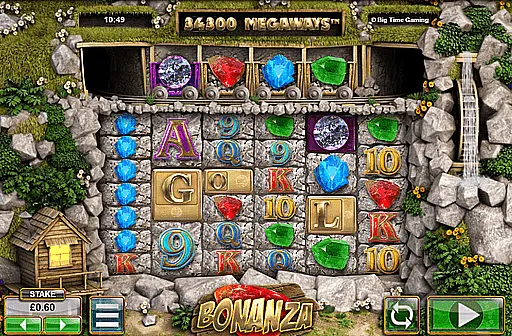
Bonanza Megaways from Big Time Gaming is the slot that defined modern cascade design for the Megaways format: a variable reel size changes the ways-to-win count on every spin while cascades remove winners and drop new symbols from a stream above the top reel. Gates of Olympus from Pragmatic Play layers a multiplier tumble system onto a cluster-pay grid — each cascade step in a chain can randomly increase the multiplier value, so the same chain that pays 5x on one spin might pay 50x on the next. Sugar Rush 1000 takes the cascade mechanic further by building persistent grid multipliers between spins that compound across cascades during the free-spin bonus.
For players who prefer a simpler cascade implementation, Reactoonz from Play'n GO uses a cluster-pay cascade structure with a charge meter that fills as cascades land — a clear progression mechanic that is easy to follow in demo mode. Jammin' Jars from Push Gaming applies cascades on an 8x8 cluster grid, where each cascade step pushes multiplier wilds further across the reels. On the high-volatility end, San Quentin xWays from NoLimit City chains cascades with xWays symbol expansion to produce some of the most dramatic single-spin outcomes in the current catalogue.
| Slot | Provider | Cascade Type | Multiplier on Cascade | Volatility | Best For |
| Bonanza Megaways | Big Time Gaming | Cascade + Megaways | Yes — increases per cascade in free spins | High | Players testing the cascade + Megaways format |
| Gates of Olympus | Pragmatic Play | Tumble (cluster pay) | Yes — random multiplier boost per tumble | High | Players who want cascade multiplier variance |
| Sugar Rush 1000 | Pragmatic Play | Tumble + persistent grid multipliers | Yes — persistent across spins in free spins | High | Players comparing compound cascade multiplier mechanics |
| Reactoonz | Play'n GO | Cluster cascade with charge meter | Charge meter fills per cascade | High | Players who want a progression-based cascade structure |
| Jammin' Jars | Push Gaming | Reaction feature on 8x8 grid | Multiplier wilds move with each cascade | High | Players who want cluster-pay cascade mechanics |
| San Quentin xWays | NoLimit City | Cascade + xWays expansion | Stacked with xWays multipliers | Very High | Advanced players testing maximum-variance cascade behavior |
The cascade mechanic changes the mathematical structure of a slot in a way that is worth understanding before moving to real-money play. In a standard reel slot, one spin produces one outcome and the variance is contained within that single result. In a cascading slot, one spin can produce a chain of results — and when a multiplier is attached to each step in that chain, the difference between a two-step cascade and a six-step cascade is not linear. It is exponential.
This creates a specific session profile: long periods of single-step cascades that produce small sequential wins, punctuated by occasional deep cascade chains where multipliers stack and the total payout from one spin far exceeds anything possible in a non-cascade game of comparable base stake. That profile is why cascading slots tend to cluster at the high-volatility end of the range — the mechanic is structurally suited to it. A low-volatility cascade game exists (Push Gaming's Jammin' Jars 2 offers a more measured version), but the majority of cascade-heavy titles are designed around the potential for that rare, high-multiplier chain.

The bonus round in most cascade slots compounds this further. Bonanza Megaways' free spins award an additional multiplier increase for every cascade step, starting from 1x and climbing with each consecutive removal. In practice this means a late-bonus cascade chain — where the multiplier has already climbed to 10x or 15x through earlier steps — produces outcomes that dwarf the base-game equivalent. Watching this resolve in demo mode makes the mechanic immediately legible in a way that a written description cannot replicate.
Not all cascading slots include a multiplier mechanic — some simply chain wins without altering the multiplier value. The presence and structure of cascade multipliers is the single most important variable that separates cascading slot titles from each other in terms of maximum win potential and session volatility.
There are three distinct multiplier structures currently used across cascading slots, each with a different session implication:
Understanding which structure a specific game uses before demo play means you know what you are looking for when a cascade chain starts. For a complete guide to games that combine cascades with multiplier mechanics, see our pages on high volatility slots and Megaways slots.
The cascade mechanic is used across most major providers, but each studio implements it differently. Knowing which approach a provider favors helps predict what a new title from that studio will feel like before testing it in demo mode.
Pragmatic Play uses the "tumble" branding for their cascade implementation and applies it consistently across their cluster-pay portfolio. The tumble mechanic in Pragmatic titles typically feeds into one of two bonus structures: a random multiplier system (Gates of Olympus, Starlight Princess) or a persistent grid multiplier system (Sugar Rush 1000). Both are designed around a high-potential bonus round where the tumble mechanic drives the variance — the base game exists primarily to deliver the feature.
Big Time Gaming invented the Megaways mechanic and combined it with cascading reels to create a format where the ways-to-win count changes on every spin while cascades chain consecutive wins. Their cascade implementation is the most mechanically influential in the industry — dozens of licensed Megaways titles from other studios use the same cascade structure. The step-increment multiplier in BTG's free spins round (most clearly visible in Bonanza Megaways) is the template that most Megaways cascade-multiplier games follow.
Play'n GO applies cascades primarily to cluster-pay formats where symbols connect adjacently rather than on fixed paylines. Reactoonz is the most widely played example: cascades fill a charge meter that activates successive feature states, creating a multi-stage progression during a single extended spin sequence. Their cascade implementation is the best available example of a mechanic where the cascade chain has a defined secondary purpose beyond simply adding more wins.
NoLimit City pairs cascades with xWays and xNudge symbol mechanics to push cascade chains toward very high multiplier values in a small number of steps. Their cascade titles occupy the extreme end of the volatility spectrum — San Quentin xWays and similar titles are structurally designed to produce the majority of their EV in rare, high-multiplier cascade events. Testing these in demo mode requires patience but shows you exactly what the session rhythm looks like before any real money is at stake.
Each provider uses a different cascade structure. Use this table to match the mechanic type to the provider before testing in demo mode.
| Provider | Cascade Term Used | Multiplier Type | Volatility Range | Key Examples |
|---|---|---|---|---|
| Pragmatic Play | Tumble | Random boost or persistent grid | High–Very High | Gates of Olympus, Sugar Rush 1000 |
| Big Time Gaming | Cascade | Step-increment in free spins | High–Very High | Bonanza Megaways, Extra Chilli |
| Play'n GO | Cascade / Reaction | Charge meter progression | High | Reactoonz, Moon Princess |
| Push Gaming | Reaction Feature | Moving multiplier wilds | High | Jammin' Jars, Fat Banker |
| NoLimit City | Cascade + xWays | xWays symbol expansion stacked | Very High | San Quentin xWays, Tombstone RIP |
| NetEnt | Avalanche | Step-increment (legacy titles) | Medium–High | Gonzo's Quest, Twin Spin Megaways |
All cascading slots listed on this page run through HTML5 and are fully playable on mobile devices — Android via Chrome or Firefox, iOS via Safari or Chrome — without any app installation. The cascade animation, multiplier display, and win chain resolution all function identically on mobile and desktop. No download from the Google Play Store or Apple App Store is required at any point.
Cascading slots have a specific mobile consideration worth knowing before playing: cascade chains take time to resolve visually, and on slower mobile connections the animation can stall between cascade steps. This is a loading issue, not a game malfunction. Switching to Wi-Fi rather than mobile data typically resolves it — cascade-heavy titles with high animation complexity (particularly Megaways formats where the reel layout changes with each spin) are more graphic-intensive on initial load than simpler fixed-reel games.
Cluster-pay cascade games — Gates of Olympus, Reactoonz, Jammin' Jars — display more clearly on mobile in landscape orientation because the grid is wider than it is tall and the cluster connections are easier to read on a horizontal screen. Megaways cascade games work in either orientation but landscape gives more space for the variable reel display. All touch controls, including bet adjustment and auto-spin settings, are implemented identically across mobile and desktop.
The cascade mechanic works identically on mobile, but a few practical details improve the experience on smaller screens.
Cluster-pay cascading games like Gates of Olympus and Reactoonz display more clearly in landscape orientation — the wider grid and cluster connection lines are easier to read on a horizontal screen.
Cascade chains with multiplier animations are graphic-heavy. Mobile data connections can stall the animation between cascade steps — switching to Wi-Fi resolves this without affecting the game result.
A deep cascade chain on mobile resolves over several seconds of animation. This is expected behavior — each step in the chain plays out visually before the next begins. Fast-play or turbo modes shorten the animation if available.
The offers below are for players who want to move from demo play to real-money cascading slots with a casino bonus. Evaluate each offer on its actual terms — wagering requirements, eligible games, and expiry window — rather than the headline figure.
 EXCLUSIVE BONUS
 99/100
 RTP: 96%
 Payout: 1–3 days
 Games: 200+
 TOP
TOP
 98/100
RTP: 98%
Payout: 1–3 days
Games: 500+
EXCLUSIVE BONUS
TOP
98/100
RTP: 98%
Payout: 1–3 days
Games: 500+
EXCLUSIVE BONUS
TOP
 97/100
RTP: 99%
Payout: 0–1 days
Games: 2000+
97/100
RTP: 99%
Payout: 0–1 days
Games: 2000+
 98/100
RTP: 97%
Payout: 0–3 days
Games: 400+
98/100
RTP: 97%
Payout: 0–3 days
Games: 400+
 NEW
NEW
 95/100
RTP: 96.3%
Payout: 1 to 24 hours
Games: 500+
95/100
RTP: 96.3%
Payout: 1 to 24 hours
Games: 500+
 95/100
RTP: 97%
Payout: 0–3 days
Games: 400+
NEW
95/100
RTP: 97%
Payout: 0–3 days
Games: 400+
NEW
 96/100
 100/100
NEW
100/100
NEW
 97/100
RTP: 95.80%
Payout: < 15 min
Games: 10,000+
97/100
RTP: 95.80%
Payout: < 15 min
Games: 10,000+
Choosing between cascading slots is more useful when approached as a mechanic-matching exercise rather than a search for the single best game. The right cascading slot is the one whose multiplier structure, grid format, and volatility level match what you actually want from a session — and those preferences only become clear after testing a few different cascade implementations side by side.
For further browsing by mechanic type, see our pages on Megaways slots, cluster pays slots, high volatility slots, and free spins slots.
Cascading slots represent one of the most significant structural departures from traditional reel play in modern slot design. The mechanic is not cosmetic — it changes the mathematical distribution of outcomes in a way that makes single-spin payout potential meaningfully higher than non-cascade equivalents at the same stake. That potential is also the reason why most cascade-heavy titles cluster at the high end of the volatility range: the mechanic is designed for infrequent, high-value chain events rather than steady, low-variance returns.
The practical takeaway is this: use the demo games on this page to test at least two different cascade implementations before playing for real money. Compare a Megaways cascade (Bonanza Megaways) against a cluster-pay cascade (Gates of Olympus) to understand how the grid format changes the cascade feel. Then test a multiplier-heavy title (Sugar Rush 1000) against a progression-based one (Reactoonz) to understand how the secondary mechanic attached to the cascade changes the session rhythm. Thirty minutes of structured demo play across four games will tell you more about which cascade style suits you than any written description can.
Continue exploring: Megaways slots, cluster pays slots, high volatility slots, new slots 2026.
Cascading slots are video slot games where winning symbols are removed from the grid after a win and replaced by new symbols falling in from above — all within the same paid spin. If the replacement symbols form another winning combination, the process repeats. A single spin can therefore produce multiple consecutive wins in a chain. The mechanic is also called tumbling reels, avalanche reels, or rolling reels depending on the provider, but the core behavior is identical.
There is no functional difference — they are the same mechanic with different studio branding. Pragmatic Play uses "tumble," NetEnt used "avalanche" in Gonzo's Quest, Big Time Gaming uses "cascade," and Push Gaming uses "reaction feature." All describe winning symbols being removed and replaced within the same spin. The only meaningful differences between implementations are whether a multiplier is attached to the chain and whether that multiplier applies in the base game, the bonus, or both.
Not inherently — RTP is set by the game's math, not by the presence of a cascade mechanic. What cascading slots do offer is a different distribution of outcomes: the potential for a single paid spin to produce multiple consecutive wins means the ceiling on individual spin results is higher than in most fixed-reel games. This comes with a corresponding increase in volatility — the same mechanic that allows deep cascade chains also produces long periods of single-step cascades with small returns. Total payout over millions of spins is still governed by the published RTP.
Gates of Olympus uses a random multiplier boost system that can apply very high multiplier values (up to 500x) during any tumble step. Sugar Rush 1000 builds persistent grid multipliers that compound across cascade steps during the free-spin bonus — structurally the most complex cascade multiplier system currently in wide use. Bonanza Megaways uses a step-increment system where the multiplier increases by 1x per cascade step during free spins, creating a clear and legible progression.
Yes. Every cascading slot on this page is available in demo mode — no deposit, no registration, no download required. The cascade mechanic, multiplier chain, and bonus trigger behavior are all fully active in demo play. You cannot win or lose real money in demo mode. If you want to play a cascading slot with a casino bonus, see the casino offers section above.
Yes. All cascading slots on this page use HTML5 and run in mobile browsers on Android and iOS without any app installation. The cascade animation, multiplier counter, and win chain resolution are all identical on mobile and desktop. Cluster-pay cascade games display more clearly in landscape orientation on smaller screens. If cascade animations stall between steps, switching from mobile data to Wi-Fi typically resolves the issue.
Bonanza Megaways is the clearest starting point for understanding the cascade mechanic. The symbols-disappear-and-drop-in sequence is visually obvious, the step-increment multiplier in free spins is easy to follow, and the Megaways format adds context for understanding variable ways-to-win. Test it in demo mode for 50–100 spins, trigger the free-spin bonus, and watch two or three cascade chains resolve — that is enough to understand how the mechanic works across the rest of the cascade slot catalogue.
Most cascading slot titles are designed at high or very high volatility — the mechanic is structurally suited to high-variance profiles because the potential for deep multiplier chains requires the base-game return to be concentrated in less frequent events. That said, cascade mechanics exist across the volatility range: Push Gaming's Jammin' Jars is high volatility, but earlier cluster-pay cascade implementations from other studios offer medium-volatility versions of the same core mechanic. Always check the volatility label and test in demo mode before committing real money.
Megaways is a reel mechanic that changes the number of symbols displayed on each reel on every spin, which changes the ways-to-win count. Cascading reels is a win-resolution mechanic where winning symbols are removed and replaced within the same spin. They are separate mechanics that are frequently combined — Bonanza Megaways uses both simultaneously. But Megaways slots do not always have cascades, and cascading slots do not always use Megaways. Gates of Olympus, for example, is a cascading slot but not a Megaways game.
This guide was written and reviewed by our iGaming team. It covers how cascading reel mechanics work across different provider implementations, how cascade multiplier structures differ between games, and how demo play can be used to evaluate cascade behavior before committing real money. All mechanic descriptions are based on published game specifications and direct demo-play testing.

Senior iGaming Writer
Filip Gromovic
Filip Gromovic wrote this guide. He specialises in explaining slot mechanics — cascades, multiplier structures, volatility profiles, and bonus trigger behavior — in practical terms that help players make informed decisions before real-money play.
More about Filip Gromovic
Senior iGaming Reviewer
Nashon Khamala
Nashon Khamala reviewed this article for factual accuracy and mechanical correctness, verifying that all cascade mechanic descriptions, multiplier structure explanations, and provider comparisons accurately reflect how these games behave in demo and real-money play.
More about Nashon Khamala

Join Bankrolla and claim 200,000 GC + 2 SC