 BTG
BTG


250 Welcome FS
Written by: Filip Gromovic Reviewed by: Nashon Khamala
Updated: Aug 2026
This page gives you instant access to free increasing multiplier slots — playable directly in your browser with no download, no deposit, and no registration required. Every game listed here features a multiplier that grows during a spin sequence, a cascade chain, or a free-spin session — paying more on later wins than on earlier ones from the same trigger. The mechanic is fully active in demo mode, so you can watch multiplier values climb and see exactly how much difference they make to individual wins before playing for real money.
Increasing multipliers appear in more than 170 current slot titles, from the cascade multiplier in Bonanza Megaways that started the modern boom, to the xNudge and xWays systems in NoLimit City’s high-volatility catalogue. Understanding the different structures — and which type matches your preferred session rhythm — is more useful than a ranked list, which is what this page covers.
BTG
 INSPIRED
 NOLIMIT
 PRAGMATIC PLAY
 PUSH
PUSH
 HACKSAW
 NOLIMIT
 BTG
BTG
 BTG
BTG
Every slot in the list above launches instantly in your browser — no account, no download, no deposit. Click any game and the demo opens on desktop, Android, or iOS. The increasing multiplier is fully active in demo mode: the value climbs with each cascade step, each free spin, or each qualifying win — exactly as it would in a paid session. Seeing the multiplier counter change in real time during a demo session tells you more about how the feature works than any written description. For the latest increasing multiplier releases added in 2026, see our new slots page.
An increasing multiplier is a mechanic where the multiplier applied to wins grows progressively during a spin sequence — rather than applying a fixed value to every win equally. The core logic is simple: the longer a winning sequence runs, the higher the multiplier climbs, and the more valuable the later wins become relative to the earlier ones.
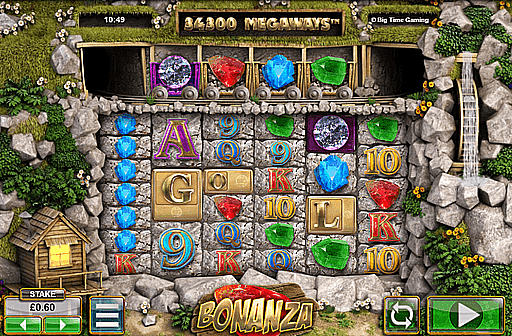
In its most basic form — as seen in Gonzo's Quest, which introduced the mechanic to the mainstream in 2011 — the multiplier increments by 1x with each cascade step: the first win in a chain pays at 1x, the second at 2x, the third at 3x, and so on up to a defined ceiling. In modern high-volatility titles, the increments are larger and the ceiling is either much higher or entirely removed. Bonanza Megaways uses an unlimited cascade multiplier during free spins — every winning cascade in the bonus adds 1x to a counter that has no cap. San Quentin 2 Death Row from NoLimit City chains multipliers in ways that can exceed 100,000x the stake at the theoretical maximum.
The practical effect of any increasing multiplier is the same: early wins in a chain are less valuable than late wins, because the later wins are paid at a higher multiple. A cascade that produces ten consecutive wins does not pay ten times the average single-win value — it pays the sum of ten wins each at different multiplier values, with the later wins far exceeding the earlier ones. Understanding that asymmetry is the most important thing to observe during demo play.
Increasing multipliers are not a single uniform mechanic — they come in four structurally distinct forms that behave differently and suit different player preferences. Knowing which type a game uses before demo play means you know what you are watching when the counter starts to climb.
Each type increments under different conditions. The type determines when the multiplier grows, how fast, and whether it resets between spins.
Increments by a fixed amount (+1x) with each winning cascade step in a chain. The first win in a chain pays at 1x, the second at 2x, and so on. Resets to 1x at the start of the next paid spin. Used by Gonzo's Quest (up to 5x base, 15x free spins), Bonanza Megaways (unlimited during free spins), and Gates of Olympus (random Zeus multiplier added per tumble).
Increases by a fixed amount with each successive free spin rather than with each winning cascade. Spin 1 pays at 1x, spin 2 at 2x, spin 10 at 10x — regardless of whether any given spin produces a win. Common in older bonus designs like Dead or Alive 2's high-volatile free spins modes, where later spins in the session are structurally worth more than earlier ones.
Accumulates between spins and does not reset at the end of each paid spin — only at the end of the bonus round or the session phase. Used in Sugar Rush's persistent grid multiplier system (positions on the 7×7 grid carry their accumulated multiplier value into the next spin) and in Infinity Reels titles where the reel-addition multiplier carries into free spins.
A specific symbol — typically a wild — carries a multiplier value that compounds with other wild multipliers it combines with. In Jammin' Jars, each wild symbol has a multiplier that multiplies against other wilds in the same win. In NoLimit City's xNudge mechanic, the wild multiplier increases each time the symbol nudges into a full-reel position.
The step-increment cascade multiplier is the most widely used increasing multiplier structure in modern slots. It was popularised by Gonzo's Quest in 2011 and became the dominant bonus mechanic across the Megaways catalogue after Bonanza Megaways removed the ceiling on the cascade multiplier during free spins in 2016.
The practical session implication is straightforward: cascade depth is everything. A cascade that produces two winning steps pays at 1x + 2x — total effective multiplier of 3x across the chain. A cascade that produces six steps pays 1x + 2x + 3x + 4x + 5x + 6x — total of 21x across the chain, with the final step alone paying six times the first. In an unlimited cascade multiplier during free spins — as in Bonanza Megaways — a very long chain can accumulate a multiplier that makes the final cascade steps pay at 20x, 30x, or higher.
The key variable to test in demo mode is not the theoretical ceiling but the realistic chain depth. How often does a cascade reach five steps? How often does it reach ten? Those frequencies, observed over 50–100 demo spins with access to the bonus round, give you a much more accurate picture of the mechanic's practical contribution to session variance than any published maximum win figure.
The bonus round is where increasing multipliers produce their largest impact in most slot titles. The majority of games with increasing multipliers apply them during free spins — either as a cascade-step increment active throughout the bonus, or as a per-spin increment where each successive spin in the sequence pays at a higher base multiple.
The cascade version during free spins is the dominant format in 2026. Bonanza Megaways remains the benchmark: the cascade multiplier has no ceiling during the free-spin bonus, and additional spins can be won during the bonus — meaning the multiplier counter can theoretically climb indefinitely if the session runs long enough. In practice, most bonus sessions produce cascade multipliers in the 5x–20x range, with outlier sessions reaching much higher. The unlimited ceiling is what makes the game's maximum win a moving target rather than a defined number.
The per-spin version is less common but present in notable titles. Dead or Alive 2 from NetEnt offers three free-spin modes, the highest-volatility of which increases the multiplier by 1x with each successive spin in the bonus. Spin 1 pays at 1x, spin 5 at 5x, spin 15 at 15x. This structure makes later spins exponentially more valuable — a dead spin at spin 1 is negligible, while a dead spin at spin 12 costs more in opportunity than the first five spins combined. Testing this in demo mode demonstrates the mechanic's risk profile in a way that a description cannot.
Most increasing multiplier implementations are limited to the bonus round and reset to 1x at the start of each new paid spin in the base game. A smaller number of titles apply an increasing multiplier during base-game play — which changes the session rhythm significantly and is worth understanding as a distinct category.
Gonzo's Quest applies its cascade multiplier during both base game and free spins — base game caps at 5x after four consecutive cascade steps, free spins cap at 15x after the same four steps. This means that a strong base-game cascade chain in Gonzo's Quest produces materially higher payouts than a single-step win of equivalent symbol value, which is unusual for a game from 2011 and part of why the mechanic felt genuinely new at the time.
Jammin' Jars applies wild multipliers during both base game and free spins — each wild symbol has a multiplier value that compounds with other wilds. This is a symbol-attached multiplier rather than a cascade-step multiplier, which means the multiplier value depends on how many multiplied wilds land on the same spin rather than on how many consecutive steps a chain produces.

The best increasing multiplier slots in 2026 are those where the multiplier structure is clear enough to evaluate in demo mode and distinct enough from a flat-multiplier game to tell you something useful about how the mechanic affects session variance. These six titles represent different multiplier implementations across different volatility levels.
| Slot | Provider | Multiplier Type | Where Active | Ceiling | Volatility | Best For |
| Bonanza Megaways | Big Time Gaming | Cascade step-increment (+1x per cascade) | Free spins only | Unlimited | High | Players testing unlimited cascade multiplier in free spins |
| Gonzo's Quest | NetEnt | Cascade step-increment | Base game + free spins | 5x (base), 15x (bonus) | Medium | Players who want base-game increasing multiplier at medium volatility |
| Jammin' Jars | Push Gaming | Symbol-attached wild multipliers (compound) | Base game + free spins | Variable — compounds multiplicatively | High | Players testing compounding wild multiplier structure |
| Sugar Rush 1000 | Pragmatic Play | Persistent grid multipliers (carry-over) | Free spins (carry from base) | Very high — compounds across spins | High | Players comparing persistent carry-over multiplier system |
| Dead or Alive 2 | NetEnt | Per-spin increment (+1x per spin) | Free spins only | 15x at spin 15 (high-volt mode) | Very High | Players testing per-spin multiplier where later spins are exponentially more valuable |
| San Quentin 2 Death Row | NoLimit City | xNudge wild + xWays + cascade chain | Base game + free spins | 200,000x theoretical max | Extreme | Advanced players evaluating maximum-variance multiplier stacking |
Different studios approach increasing multipliers with different design philosophies. Knowing a provider's approach predicts how their multiplier implementations will feel before testing in demo mode.
Big Time Gaming's contribution to increasing multipliers is the unlimited cascade multiplier during free spins, established in Bonanza Megaways and carried across their Megaways catalogue. The absence of a ceiling is the defining characteristic: the multiplier can theoretically climb indefinitely during a long enough bonus session, which makes the maximum win a function of how many cascades occur rather than a fixed design target. Most BTG Megaways titles with increasing multipliers follow this same template — the multiplier starts at 1x, increments by 1x per cascade, and resets at the end of each free spin rather than at the end of each cascade chain.
NoLimit City's multiplier architecture is the most complex in the current catalogue. Their xNudge mechanic attaches a multiplier to wild symbols that increments each time the wild nudges into a full-reel position — a wild that nudges twice carries a 2x multiplier, one that nudges three times carries 3x. Their xWays mechanic expands symbols to fill multiple rows, multiplying the symbol count and the win value simultaneously. In titles like San Quentin 2 Death Row, xNudge wilds and xWays symbols interact within the same spin, stacking their multiplier contributions. The result is a multiplier structure where the combined value of multiple simultaneous mechanics can reach values that no single step-increment system can approach.
Pragmatic Play's approach to increasing multipliers in their cluster-pays catalogue is the persistent grid multiplier — positions on the grid carry an accumulated multiplier value that does not reset between spins during the free-spin bonus. Sugar Rush 1000 is the clearest example: multiplier values build on specific grid positions during the base game, then compound with each tumble cascade during free spins. The carry-over structure means the bonus round's multiplier potential is directly connected to how much accumulation occurred before the bonus triggered — a mechanic that is impossible to fully understand from a description but immediately legible after two or three demo bonus sessions.
ELK Studios integrates increasing multipliers as a component of their proprietary bonus mechanics rather than as a standalone feature. In Pirots 4 and Tropicool 2, multipliers are attached to specific mechanic triggers — symbol collections, bonus states, and reel modifiers — that produce multiplier increments as a consequence of game progress rather than as a direct response to each win. The result is a different feel from cascade-step systems: the multiplier rises less predictably and depends more on which bonus states activate in what order.
Each studio implements the increasing multiplier differently. This table matches the implementation style to the provider before demo testing.
| Provider | Multiplier Style | Where Active | Ceiling | Key Titles |
|---|---|---|---|---|
| Big Time Gaming | Cascade step-increment (+1x per cascade) | Free spins | Unlimited | Bonanza Megaways, Extra Chilli, White Rabbit |
| NoLimit City | xNudge + xWays + cascade stacking | Base game + free spins | Very high (title-dependent) | San Quentin 2, Das xBoot 2wei, Deadwood RIP |
| Pragmatic Play | Persistent grid multipliers (carry-over) | Free spins (build in base) | Compounds per tumble — very high | Sugar Rush 1000, Gates of Olympus 1000 |
| NetEnt | Cascade step (capped) or per-spin | Base game + free spins | 5x–15x (game-dependent) | Gonzo's Quest, Dead or Alive 2 |
| Push Gaming | Symbol-attached wild multipliers (compound) | Base game + free spins | Variable — multiplicative | Jammin' Jars, Jammin' Jars 2 |
| ELK Studios | Mechanic-triggered multiplier within bonus states | Bonus states | Game-dependent | Pirots 4, Tropicool 2, Arcanum |
| Hacksaw Gaming | Cascade multiplier within high-volatility bonus | Free spins | High but capped | Pray for Six, Fire my Laser, Rise of Ymir |
An increasing multiplier in demo mode provides the same information as a real-money session in terms of mechanic behavior — the multiplier climbs, applies, and resets under identical conditions. What changes is what you should be measuring rather than just watching.
These four observations turn a demo session into actionable information about whether the game suits real-money play.
The offers below are for players who want to move from demo play to real-money sessions on increasing multiplier slots with a casino bonus. Check wagering requirements, eligible games, and expiry dates before claiming.
 97/100
 RTP: 96%
 Payout: 1–3 days
 Games: 200+
 96/100
RTP: 99%
Payout: 0–1 days
Games: 2000+
96/100
RTP: 99%
Payout: 0–1 days
Games: 2000+
 TOP
TOP
 98/100
RTP: 98%
Payout: 1–3 days
Games: 500+
98/100
RTP: 98%
Payout: 1–3 days
Games: 500+
 EXCLUSIVE BONUS
TOP
EXCLUSIVE BONUS
TOP
 98/100
RTP: 99%
Payout: 0–1 days
Games: 2000+
98/100
RTP: 99%
Payout: 0–1 days
Games: 2000+
 NEW
NEW
 BONUS
BONUS
 97/100
RTP: 96%
Payout: 1–3 days
Games: 200+
97/100
RTP: 96%
Payout: 1–3 days
Games: 200+
 95/100
RTP: 97%
Payout: 0–3 days
Games: 400+
95/100
RTP: 97%
Payout: 0–3 days
Games: 400+
 97/100
RTP: 96%
Payout: 1–3 days
Games: 200+
97/100
RTP: 96%
Payout: 1–3 days
Games: 200+
 HOT
HOT
 97/100
RTP: 96%
Payout: 1–3 days
Games: 200+
NEW
97/100
RTP: 96%
Payout: 1–3 days
Games: 200+
NEW
 99/100
Games: 4,000+
99/100
Games: 4,000+
Increasing multipliers represent the single most important structural shift in slot bonus design over the past decade. The cascade multiplier that Gonzo's Quest introduced in 2011 has evolved through unlimited Megaways implementations, persistent carry-over grid systems, compounding wild multiplier architectures, and stacked multi-mechanic systems — each building on the same core idea that later wins in a sequence should be worth more than earlier ones.
The practical recommendation for demo play: start with Gonzo's Quest to understand the foundational step-increment mechanic at medium volatility and capped ceiling. Follow with Bonanza Megaways to see what the same mechanic looks like with no ceiling. Then test Sugar Rush 1000's persistent grid system to see how a carry-over multiplier changes the session math entirely. Those three titles cover the three most important increasing multiplier structures — and after testing all three in demo mode you will have a clear picture of which type matches your real-money session preference. Adding Jammin' Jars for the compounding wild variant and one NoLimit City title for the stacked system gives you complete coverage of the mechanic's current range.
Continue exploring: cascading slots, Megaways slots, high volatility slots, free spins slots.
An increasing multiplier is a mechanic where the multiplier applied to wins grows progressively during a spin sequence. The later wins in a chain are paid at a higher multiple than the earlier ones. In its simplest form — used by Gonzo's Quest — the multiplier increments by 1x with each consecutive cascade step: first win at 1x, second at 2x, third at 3x. Modern implementations include unlimited cascade multipliers (Bonanza Megaways), persistent carry-over grid systems (Sugar Rush 1000), compounding wild multipliers (Jammin' Jars), and stacked multi-mechanic systems (NoLimit City).
A cascade increasing multiplier increments by a fixed amount — typically 1x — with each consecutive winning cascade step in a chain. The first win pays at 1x, the second at 2x, the third at 3x, and so on. The multiplier resets at the start of the next paid spin. In games with an unlimited cascade multiplier during free spins — like Bonanza Megaways — the counter can climb indefinitely over the course of a long bonus session. In capped implementations like Gonzo's Quest, the multiplier stops increasing after reaching a defined ceiling (5x in the base game, 15x in free spins).
For unlimited cascade multipliers during free spins: Bonanza Megaways. For persistent carry-over grid multipliers: Sugar Rush 1000. For compounding wild multipliers: Jammin' Jars. For base-game increasing multipliers at medium volatility: Gonzo's Quest. For stacked multiplier systems at extreme volatility: San Quentin 2 Death Row (NoLimit City). Each represents a different multiplier structure — testing all five in demo mode covers the full range of how increasing multipliers work in 2026.
Most increasing multipliers apply only during the bonus round and reset to 1x at the start of each new base-game spin. A smaller number of titles apply them during base-game play as well: Gonzo's Quest increments the cascade multiplier up to 5x in the base game; Jammin' Jars applies compounding wild multipliers during both base play and free spins. Knowing whether a game's increasing multiplier is bonus-only or base-game-active changes how you evaluate the session rhythm in demo mode.
A capped increasing multiplier stops growing after reaching a defined maximum — Gonzo's Quest caps at 5x (base game) and 15x (free spins). An unlimited increasing multiplier has no ceiling — Bonanza Megaways' free-spin cascade multiplier can theoretically climb to any value given enough consecutive cascades. In practice, unlimited multipliers produce a wider range of bonus outcomes — the difference between a short bonus with a low multiplier and a long bonus with a high one is much greater than in capped systems, which is why unlimited cascade multipliers are associated with very high volatility.
Yes. Every increasing multiplier slot on this page is available in demo mode — no deposit, no registration, no download required. The multiplier mechanic is fully active in demo play: the counter climbs, the higher multiplier values apply to later wins, and any carry-over or persistent accumulation works exactly as it would in a paid session. You cannot win or lose real money in demo mode.
A persistent multiplier is one that does not reset between spins — it carries its accumulated value forward into the next spin or across the entire bonus session. Sugar Rush 1000's grid multiplier system is the most widely known example: specific grid positions accumulate multiplier values during the base game, and those values remain active and compound with each tumble cascade during the free-spin bonus. This is structurally different from a cascade step-increment that resets at the start of each new spin — the persistent version makes later spins in the bonus session more valuable than earlier ones regardless of cascade depth on any individual spin.
Most are medium to very high volatility — the increasing multiplier mechanic is structurally suited to higher variance profiles because it concentrates payout potential in long cascade chains and high-multiplier bonus sessions rather than distributing it evenly. Gonzo's Quest is the accessible medium-volatility exception with a capped cascade multiplier. Unlimited cascade multiplier titles like Bonanza Megaways are high volatility. NoLimit City's stacked multiplier titles are extreme volatility. Always check the volatility label and test in demo mode before committing real money.
This guide was written and reviewed by our iGaming team. It covers the four main types of increasing multiplier mechanic, how each type behaves during demo play, how different providers implement the mechanic, and how to evaluate an increasing multiplier in demo mode before a real-money session. All descriptions are based on published game specifications and direct demo-play testing.

Senior iGaming Writer
Filip Gromovic
Filip Gromovic wrote this guide. He specialises in explaining slot multiplier mechanics, cascade systems, and volatility profiles in practical terms that help players evaluate games before real-money play.
More about Filip Gromovic
Senior iGaming Reviewer
Nashon Khamala
Nashon Khamala reviewed this article for factual accuracy, verifying that all increasing multiplier descriptions, type classifications, and provider comparisons accurately reflect how the games behave in demo and real-money play.
More about Nashon Khamala

Join Bankrolla and claim 200,000 GC + 2 SC