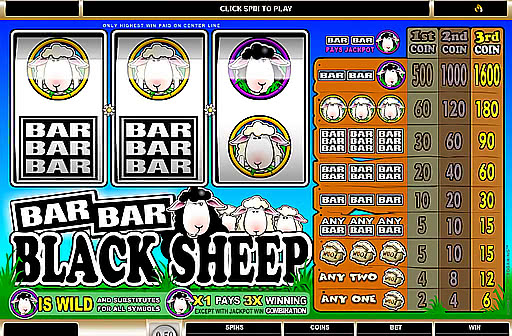
 MICROGAMING


250 Welcome FS
Online slots are the most-played casino game category on the internet — and the most varied. A 3-reel classic with one payline plays nothing like a Megaways engine with 117,649 ways to win, yet both are called slots. This page maps every type, mechanic, and theme you will encounter, so you can choose slot games online that match your session goal instead of spinning blindly. Whether you want to play online slots for free with no deposit or move straight to online slots for real money, the mechanics that govern every outcome are the same — and they are explained below.
The titles below are consistently among the highest-played slot games online — selected on session volume, verified RTP, and bonus trigger frequency, not provider payments. Each card shows provider, RTP, volatility, and max win so you can compare at a glance before loading the demo. Click any title to open the full review and launch free play. For the freshest releases see new slots.
MICROGAMING
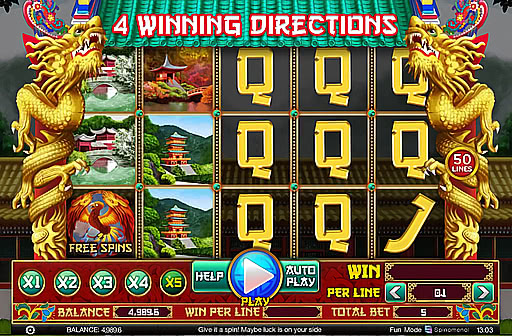 SPINOMENAL
 PAF
PAF
 BTG
BTG
 IGT
IGT
 KA
KA
 GAMESYS
 BARCREST
 NEOGAMES
 BLUEPRINT
 QUICKSPIN
 SPINOMENAL
 PAF
PAF
 IGT
IGT
 SIMBAT
 BOSS
BOSS
 IRONDOG
 SG
SG
 IGT
IGT
 PLAY'N GO
 WORLD MATCH
 GAMEPLAY
 IGT
IGT
 PAF
PAF
 BETCONSTRUCT
 777IGT
 BLUEPRINT
 BLUEPRINT
 AMAYA
AMAYA
 BETCONSTRUCT
The core loop of every online slot game — from a 3-reel classic to a 6-reel cluster-pays title — follows the same four steps. Understanding each one before you stake real money removes the learning-curve cost entirely.
Before committing money, use demo mode. Every slot on a reputable casino carries a mechanically identical free-play version. Demo mode requires no deposit and, on most platforms, no account — load the game, click Play for Fun, and the full mechanic runs on virtual credits. It is the single best way to evaluate whether a slot's variance suits your playing style before it costs you anything.
Every online slot is governed by a Random Number Generator — a certified algorithm that produces a new independent outcome on every spin. When you press Spin, the RNG has already determined the reel positions before the animation stops. The spinning visuals are cosmetic; the result is sealed at the moment the button is pressed.
RNG certification is carried out by independent testing laboratories. eCOGRA, GLI (Gaming Laboratories International), and iTech Labs are the most widely recognised accreditation bodies in regulated markets [VERIFY: confirm which specific labs certify the games on your platform; add a contextual external link to the relevant lab's site for E-E-A-T]. A slot cannot be configured to trigger bonuses more often in demo than in live play — providers are contractually required by regulators to maintain mechanical parity between both versions. This means demo sessions are genuinely informative about how a game behaves under real-money conditions.
What the RNG cannot do is guarantee a specific return within any short session. RTP is a long-run statistical average calculated across tens of millions of spins aggregated across all players. In 100 spins your actual return can be zero or many multiples of your stake. This is why volatility — how the game distributes its theoretical return — matters as much as RTP when choosing a slot for a specific session length and bankroll.
Playing online slots for real money requires four steps: open a licensed casino account, complete identity verification (standard KYC — ID and proof of address), make a deposit via your preferred method (card, bank transfer, e-wallet, or crypto deposit where supported), and navigate to the slots lobby. Set your single-spin bet using the 1%-of-session-budget rule above, define your stop conditions before the first spin, and always use your casino's deposit-limit and self-exclusion tools. For welcome offers that include free spins with no deposit requirement, see no deposit casino bonuses.
Responsible gambling note: Online slots are entertainment, not a source of income. Set loss and deposit limits before every session. If gambling stops being enjoyable, use your casino's self-exclusion tools or contact GamCare or BeGambleAware for free support.
These three figures govern every decision worth making about a slot: which game to choose, what bet size to use, and how long your budget is likely to last. Treating them as abstract percentages is the mistake most players make.
RTP (Return to Player) is the theoretical percentage of all money wagered on a slot that the game pays back to players over an indefinitely large number of spins. A slot with 96% RTP returns, on average, £96 for every £100 wagered — across millions of spins, aggregated across all players. Your individual session will vary enormously from this figure in both directions.
The inverse of RTP is house edge: a 96% RTP slot carries a 4% house edge. RTP is most useful as a comparison instrument — a 97% RTP slot is mathematically better for recreational play than a 94% RTP slot, all else being equal. The highest-paying option in most catalogues is Mega Joker by NetEnt at approximately 99% RTP [VERIFY: confirm from NetEnt's official game page]. For a curated list, see slots with 99% RTP. Use the RTP calculator to model expected loss across different session lengths and bet sizes.
| RTP % | House Edge % | Expected Loss per £100 Wagered |
|---|---|---|
| 99% | 1% | £1.00 |
| 97% | 3% | £3.00 |
| 96% | 4% | £4.00 |
| 94% | 6% | £6.00 |
| 88% | 12% | £12.00 |
Volatility — also called variance — describes how a slot distributes its theoretical payout across individual spins. Two slots can share an identical 96% RTP and behave in completely opposite ways during a session. Volatility is the difference between them.
A low-volatility slot pays frequently in small amounts. In a 200-spin session at £0.20 per spin (£40 total wagered), you might collect 140–160 winning spins, mostly between £0.10 and £0.60, with your balance drifting slowly downward. Best for longer sessions on a fixed budget or players who want continuous engagement. See low volatility slots for the full list.
A high-volatility slot concentrates the same theoretical return into far fewer, much larger events. The same 200-spin session might produce 60 small wins with one or two bonus triggers that account for the majority of total return. Between bonus triggers, long dry stretches can deplete a small bankroll before the bonus ever lands. High-volatility games require a larger session budget relative to your bet size. See high volatility slots and the volatility deep-dive for more. Medium volatility slots sit between both poles.
| Level | Win Frequency | Win Size | Best For |
|---|---|---|---|
| Low | High — most spins return something | Small (1–10× bet typical) | Tight budgets, extended play, casual sessions |
| Medium | Moderate — balanced cadence | Mid-range (10–100× bet typical) | Most players; predictable enough to plan around |
| High | Low — long dry spells common | Large (100×–5,000×+ stake possible) | Larger bankrolls; players chasing max-win events |
How a slot counts wins is as important as how often it pays. Four systems currently dominate the market.
Fixed paylines run in set patterns across the reels — typically left to right from reel 1. A 20-payline slot checks 20 specific symbol paths on every spin. You cannot deactivate individual paylines on most modern titles. See filtered lists at 10-payline slots and 20-payline slots.
All-ways (243 ways, 1,024 ways) pay for matching symbols on adjacent reels left to right regardless of row position. A 5-reel, 3-row all-ways title produces 243 possible combinations per spin. Some titles expand to 1,024 or beyond by increasing grid depth.
Megaways is a licensed mechanic from Big Time Gaming that varies the number of symbols shown on each reel every spin — between 2 and 7 per reel on a standard 6-reel setup — producing up to 117,649 ways to win when all reels show maximum symbols simultaneously [VERIFY: confirm 117,649 figure from BTG's official Megaways documentation]. Most Megaways titles pair this with cascading reels and a free-spins round carrying an escalating multiplier. Browse Megaways slots for the full catalogue.
Cluster pays require a minimum number of matching symbols — typically 5 or more — to connect horizontally or vertically anywhere on the grid, with no payline needed. Wins trigger cascades that clear the cluster and replace symbols, allowing multiple wins from one spin. This mechanic is common on large grids (6×5, 7×7). Browse cluster pays slots for all titles using this format.
The phrase "online slots" covers six structurally distinct game formats. Each has different reel counts, pay mechanics, and session dynamics. Knowing the category a game belongs to tells you more about how it plays than any single headline feature.
Classic slots replicate the original mechanical slot machine format: three reels, typically one to three paylines, and a symbol set built on fruits, bars, bells, and 7s [VERIFY: confirm typical 1–3 payline range from a sample of classic slot game sheets]. The mechanic is transparent — every possible outcome is visible on the paytable and win conditions are immediate. Most classic slots carry low-to-medium volatility with no bonus rounds in the traditional sense, though many modern 3-reel slots add a gamble feature or a single multiplier mechanic. If you want to understand slot fundamentals before moving to feature-heavy titles, this is the right starting category.
Video slots are the dominant format in any online casino game library — 5-reel grids with typically 10 to 25+ paylines [VERIFY: confirm typical payline range from a sample of 5-reel game sheets], themed graphics, and at least one feature mechanic (free spins, bonus round, or both). The shift from mechanical to video format removed the physical constraint on symbol weight, enabling far wider RTP ranges and much larger max-win values than a 3-reel machine can structurally support. For a full breakdown of how the format works, see the 5-reel slot guide. Browse all 5-reel slots.
3D slots are video slots distinguished by cinematic-quality animations — character-driven story arcs, animated win events, and intro sequences that sit closer to short films than casino UI. BetSoft is the studio most closely associated with this visual tier [VERIFY: confirm BetSoft association with 3D slot category from BetSoft's official site]. The trade-off for visual complexity is occasionally higher system requirements — older mobile hardware may experience frame drops on the heaviest 3D titles. Mechanically, 3D slots follow standard video slot rules; the category label refers to the rendering style, not a distinct pay mechanic.
Megaways slots use BTG's licensed variable-reel mechanic to generate a different number of ways to win on every spin — up to 117,649 on a standard 6-reel configuration [VERIFY: BTG source]. The mechanic pairs almost universally with cascading reels and a free-spins round where an unlimited multiplier increments with each cascade. This combination produces the format's characteristic profile: long base-game dry spells, then a single bonus that can return hundreds of times the stake. Megaways titles are high volatility without exception — run them in demo for a meaningful number of sessions before committing real money, because the escalating-multiplier mechanic is genuinely counterintuitive on first encounter.
Every HTML5 slot is technically a mobile slot — the game renders in the browser on any device with no app or APK required. The distinction matters in practice because older Flash-era titles were never ported to HTML5 and do not work on mobile browsers. Any slot listed as HTML5 on the provider's spec sheet loads and plays fully in Safari on iOS and Chrome on Android, including all bonus features, autoplay, and bet controls. Touch-optimised UI — larger spin buttons, swipe-navigable paytables, portrait-mode layouts — varies by provider and title.
Standard slots pay from a fixed prize pool defined by the paytable — a win of 500× your bet is always 500× your bet. Progressive slots work differently: a percentage of every real-money bet placed on the game — across every casino that carries it — feeds a shared prize pool that grows continuously until one player triggers the jackpot condition. The pool then resets to a seeded minimum and begins accumulating again.
This mechanism explains why progressive jackpot slots typically carry lower base-game RTPs than comparably featured non-progressive titles: a portion of the theoretical return that would otherwise fund regular wins is instead diverted to the jackpot pool. Mega Moolah by Microgaming is the most recognised title in this category and holds multiple records for online jackpot payouts [VERIFY: confirm current Mega Moolah record payout from Microgaming press releases or Guinness World Records]. See all jackpot titles at jackpot slots. Use the progressive jackpot calculator to model expected hit frequency against current pool size.
A progressive slot is any slot machine where the top prize grows with each bet placed until it is won. Two structural types exist. A networked (pooled) progressive connects the jackpot across multiple casinos — every spin on the game at any participating property contributes to one shared pool, which is why networked jackpots can reach eight figures. A standalone progressive accumulates only from bets placed on that specific machine at that specific casino, producing a smaller but more frequently triggered jackpot. Trigger mechanics vary by title: some use a dedicated bonus wheel that appears randomly after any spin; others require a specific symbol combination on a maximum bet line [VERIFY: confirm trigger mechanics for specific featured titles from provider game sheets].
On high-volatility online slot games, the base game is effectively a metered path to the bonus — the bulk of the theoretical return is concentrated in the bonus round, not spread across base-game wins. Understanding how each bonus mechanic is triggered and what it does during the round is therefore not optional context; it is the core information you need before staking real money.
Scatter-triggered free spins are the most common bonus entry mechanism. Landing 3 or more scatter symbols anywhere on the reels triggers an award of free spins — commonly 10 to 20 spins depending on the scatter count [VERIFY: confirm typical free spin counts from a representative sample of provider game sheets]. During free spins the game runs without deducting from your balance, and most titles apply an enhanced mechanic: a multiplier that increments with each win, sticky wilds that remain locked in place for the duration, or an expanded symbol set that increases win potential. See slots with scatter symbols and free spins slots.
Bonus buy (Feature Buy / Bonus Purchase) allows you to pay a premium to trigger the bonus round immediately, bypassing the base game entirely. The cost is typically 50× to 100× the base bet [VERIFY: confirm typical bonus buy cost range from game sheets of representative titles]. The bonus buy does not alter the bonus round mechanics or the RTP of the bonus itself — it removes the probabilistic cost of waiting for a scatter trigger. Some jurisdictions prohibit bonus buy; in those markets the button is hidden but the bonus remains accessible via standard scatter triggers.
Three wild types worth knowing before you play: sticky wilds land on the reels and remain fixed for a set number of subsequent spins. Expanding wilds grow to fill their entire reel column on activation. Multiplier wilds carry a multiplier value (typically 2×–5×) that applies to any win line passing through them — when multiple multiplier wilds appear in the same winning combination, their values are usually multiplied together rather than added.
Slot themes are the visual and narrative frame around the mechanic — they determine the symbol set, soundtrack, and animation style. Providers use them primarily as player-segmentation tools: a mythology slot and a horror slot can share an identical Megaways engine but attract completely different audiences. The eight most represented theme categories in the current market:
The studio that builds a slot determines its certification body, typical RTP range, max-win ceiling, and visual production standard. The providers below account for the largest share of titles in any major online casino game library. Browse the full catalogue at slot developers.

Pragmatic Play [VERIFY: HQ and founding year] — Highest-volume new-release provider in the current market. Consistent 96%–96.5% RTP across most titles. Responsible for Gates of Olympus, Sweet Bonanza, and the entire Big Bass series.

NetEnt [VERIFY: HQ and founding year] — Swedish studio responsible for Starburst, Gonzo's Quest, and Dead or Alive 2. Strong RTP reputation with several titles above 97%, including Mega Joker at approximately 99% RTP.

Microgaming [VERIFY: HQ and founding year] — One of the longest-operating studios in the industry. Home of Mega Moolah, the world's most recognised networked progressive jackpot slot, which has set multiple payout records.

IGT [VERIFY: founding year from IGT About page] — Based in Reno, Nevada. Dominant in US land-based casinos. Digital versions of Cleopatra, Wheel of Fortune, and Double Diamond are its flagship online titles.

Play'n GO [VERIFY: HQ and founding year] — Swedish studio. Book of Dead is the industry benchmark for the expanding-symbol bonus mechanic — test any competitor "Book" slot against it in demo to evaluate the format.

Yggdrasil — Known for high-production-value titles and the proprietary GIGA mechanic system. Above-average RTP across many catalogue titles. Studio of Vikings Go Berzerk and Cazino Cosmos.

Hacksaw Gaming — Malta-based specialist in extreme high-volatility titles. Multiple titles carry 10,000×–50,000× max-win potential. Go-to studio for players chasing the highest max-win ceiling in the regulated market.

NoLimit City — Horror and outlaw themes. Proprietary xNudge and xBomb mechanics. Among the highest max-win ceilings in regulated markets. Studio of Tombstone, Mental and Serial.
No strategy can alter the RNG outcome of a certified slot — outcomes are random by design and by regulation. What bankroll management and game-selection discipline can do is maximise the number of spins your budget generates, match the game's volatility profile to your session length, and reduce the probability of exhausting your balance before the game produces a representative sample. These are risk-management practices, not guaranteed-win approaches. For additional reading: how to win at slots, how to pick a winning slot machine, and the 5-spin slot strategy explained.
Choose a game, set your bet at no more than 1% of your session budget per spin, and press Spin. Each spin is resolved independently by a certified RNG — there is no pattern or sequence to predict. Use demo mode first to understand a game's mechanics before staking real money. The full step-by-step walkthrough is in the How to Play section above.
Online slots use a Random Number Generator (RNG) certified by an independent testing lab such as eCOGRA, GLI, or iTech Labs. When you press Spin, the RNG instantly determines the reel positions — the spinning animation is cosmetic. Each spin is statistically independent of every previous spin. RTP is a long-run average calculated across millions of spins, not a per-session guarantee.
Volatility describes how a slot distributes its theoretical payout. Low volatility means frequent small wins — your balance decreases slowly and steadily. High volatility means infrequent but large wins, with long base-game dry spells between bonus events. Match your game's volatility to your session budget: high-volatility slots require a larger bankroll relative to your bet size to give the RNG enough spins to behave representatively. Use the volatility calculator to model this before playing.
A progressive slot pools a percentage of every real-money bet — across all participating casinos on a networked progressive — into a prize fund that grows until one player triggers the jackpot condition. Networked progressives like Mega Moolah can reach eight-figure sums. Standalone progressives accumulate only from bets on one specific machine and pay out smaller, more frequent jackpots. The trade-off is a lower base-game RTP than comparable non-progressive titles. See progressive slots for the full catalogue.
RTP (Return to Player) is the theoretical long-run percentage of all wagered money a slot returns to players. A 96% RTP slot returns, across millions of spins, £96 per £100 wagered on average. In a single session your actual return will vary significantly from this figure. RTP is most useful as a comparison tool — a 97% RTP slot has a lower house edge than a 94% RTP slot, all else being equal. For the highest-paying options, see slots with 99% RTP. Use the RTP calculator to model expected loss by session length.
Open an account at a licensed casino, complete identity verification (KYC), make a deposit via card, e-wallet, bank transfer, or crypto where supported, and navigate to the slots lobby. Set your spin bet at no more than 1% of your session budget and define a win limit and a loss limit before your first spin. Use your casino's responsible gambling tools — deposit limits and self-exclusion — whenever needed. See real money slots for casino recommendations and no deposit casino bonuses for offers that let you try real-money play with reduced initial risk.
"Best" depends on what you are optimising for. For RTP: look for titles at or above 96%, with Mega Joker (NetEnt) at approximately 99% RTP near the top of the market [VERIFY]. For max-win potential: Hacksaw Gaming and NoLimit City dominate, with multiple titles at 10,000×–50,000× stake. For mechanic depth: Megaways titles from BTG and Pragmatic Play. For extended low-risk play: classic and low-volatility video slots with frequent base-game pays. The Featured Games section at the top of this page lists current top performers across all these categories. For themed collections see pirate slots, Megaways slots, and progressive slots.

Filip Gromovic is a senior slots reviewer here at FreeSlots99 with over five years of experience evaluating the latest drops in the world of iGaming.
Being a slot fan himself, Filip approaches slot ratings just the way we like it – professionally, but also from a player’s standpoint.
That enables him to give his unbiased take on the slot’s features, gameplay and design, while only recommending top-tier releases to our readers.
More info on Filip Gromovic



Having served FreeSlots99 for more than 5 years as a senior content editor and reviewer, Nashon Khamala has extensive knowledge in game slots and iGaming.
His membership in the Editorial Freelancers Association helps him deliver content that reaches both editorial excellence standards and an engaging information level.
By using his expertise in slots games combined with player-focused analysis, Nashon delivers a professional evaluation of slot features and player experiences in his reviews.
More info on Nashon Khamala


Join Bankrolla and claim 200,000 GC + 2 SC